Mountain View, Missouri (West Plains / Willow Springs / Winona / Cabool / Summersville) ---- Spinal Decompression Doctor, Russell Schierling, presents another blog article on Spinal Decompression Therapy.
ICE -vs- HEAT
It's All About the Blood Vessels
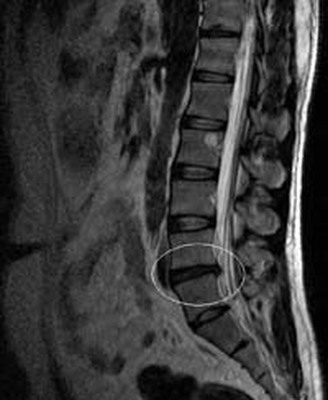
Remember when you ruptured your disc? You were bending over trying to get your boat hooked up to your hitch when BAM --- you felt a stabbing pain in your low back that took you to your knees. In the months since that time, you have had a set of X-rays, a CT Scan, and an MRI of your lumbosacral area. Your doctor told you that you have a DISC BULGE at the L5 disc, and that it is pinching a nerve. This is not news to you because you can feel the constant dull ache in your leg. That is, until you move wrong and it runs through your leg like an electric shock of pure pain that the doctor called SCIATICA. The doctor wrote you prescriptions for four different medications and then told you to use a heating pad several times a day. You are not doing well at all, and want to know if you are doing things the right way. Of course the medications are not helping you get better. They are masking the symptom so that you can live with it while it is supposedly healing. Unfortunately they are not doing a very good job of doing even that. But the medications are another topic for another day. What I want to discuss with you right now is the difference between using ice and heat, and when one is better than the other.
IF I HURT MY BACK DO I USE ICE OR HEAT?
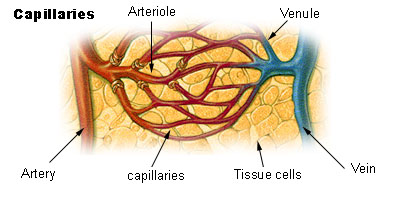
Allow me to take you through the progression of a back injury. When you bent over to jockey with the ball hitch on your truck (you are hitching up your boat), you felt something give in your back. Some soft tissues (like muscles) have a rich blood supply. Some, like TENDONS or LIGAMENTS have a very poor blood supply. Arterial blood comes from the heart / lungs loaded with oxygen. The oxygen is transported out of the blood vessel and into the body's tissues at the capillary level. Capillaries are so small that only one red blood cell at a time can pass through without creating a traffic jam. Because they are so small and fragile, when you injure tissue, you actually injure (tear) the capillaries that supply blood and oxygen to said tissue. This causes leaking of fluid into the tissue itself (swelling). The group of Immune System chemicals (INFLAMMATION) that are released due to this tissue injury, attract fluid (swelling) to the area. It is important to remember that swelling and inflammation, while intimately related to each other, are not synonymous terms. Although Inflammation is necessary for the healing process to take place, too much of it is bad news as far as pain is concerned. This is why you need to use ice --- even if it does not immediately help with your pain. Ice is a vasoconstrictor ---- it closes down the smallest blood vessels in the torn tissue so that less fluid and chemicals leak out. The result is less swelling and Inflammation --- and hopefully less pain. If you are going to use heat for your back, I almost always recommend a "global" heat. In other words, don't put the heat pack on your low back because that will attract fluid (swelling) to that area. Instead, get in a bath, shower, jacuzzi, etc. The larger the area you heat, the less chance of swelling a local area.
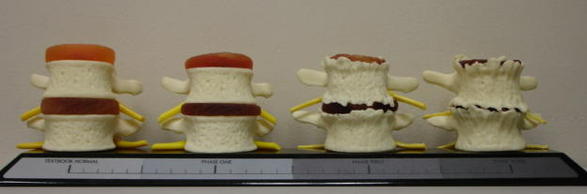
YES, YOU CAN HAVE DISC DEGENERATION AT AGE 33
Hello Dr. Schierling, I have been struggling with severe low back pain for a while now. Neither chiropractic adjustments nor physical therapy have helped me much. My doctor finally suggested that I have an MRI. Although I do not have Herniated Discs, they told me that I have something called "Spondylogenic Spondylolysis". He said that most doctors refer to this as DJD (Degenerative Joint Disease) or DDD (Degenerative Disc Disease). How can this be? I'll admit that I weigh a bit more than I should, and do not get as much exercise as I would like, but come on..... I mean; how in the world does this happen? I just turned 33 a couple of months ago. I saw your DESTROY CHRONIC PAIN website. Would your scar tissue treatment help me? What can I do?
Sincerely, XXXXX XXXXXXXX Wow! These kinds of letters break my heart. Why? Mainly because the vast majority of similar problems are almost 100% preventable! DJD is not a disease in any real sense of the word ( HERE). It is a problem caused by abnormal joint motion over time. For this sort of degeneration to be occurring at such an early age, it probably means that this individual has had underlying injury / SUBLUXATION for years (it turns out he was in a severe MVA back in high school). The good thing is that this person can likely be helped by non-surgical Spinal Decompression Therapy. Of all the different problems that we help via SCAR TISSUE REMODELING, Degenerative Lumbar Discs are not at the top of the list. However, they are at the top of the list of the "Best Responders" as far as Spinal Decompression Therapy is concerned. If you get a couple minutes, check out our VIDEO TESTIMONIALS.
_Mountain View, Missouri (West Plains / Willow Springs / Winona / Cabool / Summersville) ---- Spinal Decompression Doctor, Russell Schierling, presents another blog article on Spinal Decompression Therapy.
HEY DOC... WHAT SHOULD I TAKE FOR MY BACK PAIN?
_It's a question that I am asked all too frequently. " Hey Doc, what can I take for my back? It's killing me!" Unfortunately, there are no medications that can effectively address the underlying causes of back pain ---- particularly the severe back pain caused by HERNIATED DISCS, DEGENERATIVE DISCS, or SPINAL STENOSIS. In order to determine which ones were the most effective, a recent issue of the Cochrane Review looked at the medications which are most likely to be prescribed for back pain. For those of you who follow current medical research, the results were not surprising. Although studies like this should lead medical doctors to change the manner in which they prescribe medications for their back pain patients ---- I'm not holding my breath. The study was a Meta-Analysis. This means that although they did not do any new research, they actually looked at numerous similar studies over a period of many years. What drugs did they study? The Back Pain Medications: - NSAID’s (Non-Steroidal Anti-Inflammatory Drugs) include drugs such as aspirin, ibuprofen (Motrin and Advil) and naproxen (Aleve)
- Another class of NSAID’s called Cox 2 inhibitors (Celecoxib aka Celebrex). Vioxx was one of these drugs, and was pulled years ago because it was killing people.
- Acetaminophen (Tylenol)
- Muscle Relaxers
Their Findings: - NSAIDs work in the short-term, but they aren’t really better than plain Tylenol. They also have numerous side effects.
- NSAIDs are more effective than a placebo, but with more side effects
- COX-2 inhibitors (a different kind of NSAID) do spare the GI tract; but they don’t work better than the traditional NSAIDs (by the way, newer research is saying they do not spare the GI tract)
- There wasn’t one individual NSAID that worked better than others
- It is not necessary to combine an NSAID with a muscle relaxant. This doesn’t provide greater symptom relief but it does increase the negative side effects
What Did the Experts Determine?- Expensive prescription drugs do not work any better than Over The Counter cheapies like Tylenol, Advil, Motrin or Aleve.
- All NSAID’s are about the same in regards to relieving back pain ---- and are no better than Tylenol (which, if you ask people who suffer with back pain, is not effective).
- Muscle relaxants are not good for back pain patients as they do not improve outcomes, but do increase the numbers of side-effects.
This does not even touch on the issue of Corticosteroids, which not only have a terrifying array of side effects, but actually work to rapidly degenerate collagen-based tissues (Spinal Discs, ligaments, tendons, cartilage, bone, muscles, etc...). This is why doctors who routinely give STEROID INJECTIONS, should warn patients that even if it helps with their pain, they cannot have very much of it because it eats the Spinal Discs. Unfortunately, these warnings are not given as often as they should be, and if they are, doctors never seem to mention why corticosteroids are dangerous.Listen folks, you already know that these drugs are not effective for what you are dealing with. The dirty little secret is that you doctor knows it as well. If you are struggling with chronic low back pain, at least think about trying something different than the same old same old. We will sit down and talk. I will review your test results. If I think I can help you, I will. Unfortunately, at least half of those who I consult with are not GOOD CANDIDATES for our Spinal Decompression Program. But those who are tend to get excellent results. Make sure to watch a couple of the Testimonial Videos on our Homepage.
ASYMPTOMATIC DISC HERNIATIONS Fact or Fiction?
PAIN
Image by Mansuper
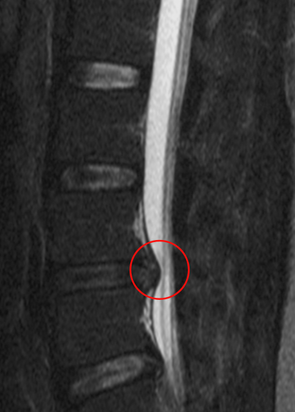
| BOTH HAVE A HERNIATED L5 DISC (LATERAL VIEW)
| NO PAIN
| | If you want an excuse to operate on a pitcher’s throwing shoulder, just get an M.R.I. World's foremost sports surgeon, Dr. James Andrews after doing shoulder MRI's on 31 healthy big-league pitchers visiting him for other reasons, and then finding that 90 percent of them had both cartilage and Rotator Cuff abnormalities. | | Like Dr. Andrews in the quote above, many of you have found out the hard way that MRI examinations are not all they're cracked up to be. Oh; most people already realize that x-rays will not show a Disc Herniation. But they are typically under the impression that an MRI will show anything and everything that might be wrong with you. But if you have followed my DAY TO DAY BLOG, you are aware that this is frequently not the case. Spend any significant time researching Disc Herniations, you are likely to have heard of " Asymptomatic Disc Herniations". Buckle your seat belts and hold on to your hats because this is going to start getting interesting. Depending upon whose research you believe to be the most accurate, between 35% - 75% of the adult American population has Asymptomatic Disc Herniations. What does this mean? Only that the majority of U.S. adults are walking around with Disc Bulges / Disc Herniations ----- but have no idea because they do not have back pain or leg pain ( SCIATICA). FUN FACTS ABOUT DISC HERNIATIONS
- Herniated Discs are not necessarily painful --- in fact much of the time they are "asymptomatic".
- The majority of Herniated Discs are asymptomatic (they cause no pain).
- Surgery is rarely needed to fix most cases of Herniated Disc.
- SPINAL SURGERY frequently means poor outcomes for Herniated Discs.
- Herniated Discs do not typically get "more herniated" with time (however, they do end up DEGENERATING).
- Although the pain may go away after a period of months or years, Herniated Discs do not resolve on their own.
- Herniated discs cannot be seen with an x-ray.
- Herniated Discs can happen without an overt injury.
- Herniated Discs can happen due to compensation caused by an abnormally rotated pelvis.
- Medical treatment is not necessary for most herniated discs.
- Many disc-like conditions are misdiagnosed (i.e. PIRIFORMIS SYNDROME)
In fact, according to the research I am about to show you, if I rounded up 100 people with an average age of 45, with no history of low back pain; and were to do MRI's of the lumbar spine on all of them, the results would be as follows. - 35% - 75% would have Disc Bulges
- Just under 40% would have Disc Protrusions (Disc Herniations contained within the Annulus)
- Just over one in ten would have Disc Extrusions (Disc Herniations where the Nucleus Pulposes is actually leaking out of the Annulus) --- severe Disc Herniations.
How do I know all this? Not only have I learned a thing or two over the two plus decades I have been taking care of patients, but there are numerous scientific studies on the subject that encompass nearly six decades. Let's take a couple of minutes to look at just a few of them. I want you to note that some of the variations between studies has to do with the fact that there are no hard and fast definitions for terms like Disc Herniation, Disc Bulge, Disc Rupture, etc. These terms are often used interchangeably with each other and have the potential to create some confusion. STUDIES ON ASYMPTOMATIC DISC HERNIATIONS
Image by Magnus Manske
|
Image by User: Tonbi_ko
| In one of the first studies of its kind, George Washington University Medical Center Orthopedist, Dr. S.W. Wiesel started the ball rolling with a study published in the September 1984 edition of the medical journal Spine ( The Incidence of Positive CAT Scans in an Asymptomatic Group of Patients). " In order to study the type and number of CAT scan abnormalities of the lumbar spine that occur in asymptomatic people, 52 studies from a control population with no history of back trouble were mixed randomly with six scans from patients with surgically proven spinal disease, and all were interpreted by three neuroradiologists in a blinded fashion. Irrespective of age, 35.4% were found to be abnormal. In the over 40-year-old age group, there was an average of 50% abnormal findings." At least 35% abnormalities in asymptomatic individuals.Six years later, in the March 1990 edition of the American Volume of The Journal of Bone and Joint Surgery, renowned orthopedic surgeon Scott Boden, also working at GWU Medical Center, followed up with a paper titled, " Abnormal Magnetic-Resonance Scans of the Lumbar Spine in Asymptomatic Subjects. A Prospective Investigation". In it he said that, " We performed magnetic resonance imaging on sixty-seven individuals who had never had low-back pain or sciatica. The scans were interpreted independently by three neuro-radiologists who had no knowledge about the presence or absence of clinical symptoms in the subjects. About one-third of the subjects were found to have a substantial abnormality. Of those who were less than sixty years old, 20 per cent had a herniated nucleus pulposus. In the group that was sixty years old or older, the findings were abnormal on about 57 per cent of the scans: 36 per cent of the subjects had a herniated nucleus pulposus and 21 per cent had spinal stenosis. There was degeneration or bulging of a disc at at least one lumbar level in 35 per cent of the subjects between twenty and thirty-nine years old and in all but one of the sixty to eighty-year-old subjects." At least 35% abnormalities in asymptomatic individuals.1994 saw yet another study published on this topic. Dr. Maureen Jensen's "Magnetic Resonance Imaging of the Lumbar Spine in People without Back Pain" published in the July 14 issue of the New England Journal of Medicine. In this study we learned that, " Thirty-six percent of the 98 asymptomatic subjects had normal disks at all levels. 52 percent of the subjects had a bulge at at least one level, 27 percent had a protrusion, and 1 percent had an extrusion. Thirty-eight percent had an abnormality of more than one intervertebral disk. On MRI examination of the lumbar spine, many people without back pain have disk bulges or protrusions. Given the high prevalence of these findings and of back pain, the discovery by MRI of bulges or protrusions in people with low back pain may frequently be coincidental. " Over 50% of asymptomatic individuals had Disc Bulges.In 1995, Volvo's 'Clinical Sciences Study of the Year' ( The diagnostic accuracy of magnetic resonance imaging) was published in the December issue of Spine. The present study has presented evidence that.... asymptomatic patients show a high incidence rate of disc herniations (76%). Individuals with minor disc herniations (i.e., protrusion, contained discs) are at a very high risk that their magnetic resonance images are not a causal explanation of pain because a high rate of asymptomatic subjects (63%) had comparable findings. I must make note of the fact that this study also found that a whopping 85% of the asymptomatic subjects had class 3-5 DISC DEGENERATION on MRI as well. At least 75% of asymptomatic individuals had Disc Herniations.A few years later, a group of prominent Swiss researchers, led by Dr. Weishaupt of Zurich's Orthopedic University Clinic's Department of Diagnostic Radiology, got their hands on 60 hospital employees with no history of back pain. The research team ran all of them through MRI's of the lumbar spine. Even though the paper's conclusion infers that MRI is a wonderful tool for diagnosing back pain in the under-50 crowd, reading between the lines leads one to a different conclusion. 40% of the volunteers had " Disc Protrusions" even though they did not have back pain. Even more amazing was that almost 1 in 5 of the test subjects had a " Disc Extrusion" (severe Disc Herniation). The results were published in the December 1998 issue of the journal Radiology. Almost 20% of the asymptomatic individuals studied had 'severe' Disc Herniations.*INCREDIBLE STUDY*In Y-2K, Dr. Michael Raskin (M.D. / Attorney) got into the mix with a paper he published in Applied Radiology. In the paper, whose topic pertained to the difficulty of accurately diagnosing personal injury clients, he exposed one of the dirty little secrets that hundreds of thousands of people on SSI Disability have known for years --- essentially that back injuries are easily faked. " Asymptomatic individuals with "abnormal" MRI--Recent literature has shown that many anatomical abnormalities of the back, including disc bulges and disc herniations, are quite common in people without back pain. Even prior to magnetic resonance imaging (MRI), the high incidence of disc abnormalities in the lumbar spine of asymptomatic individuals was quite well known. In 1956, a study using postmortem examinations of the entire spine showed a 39% prevalence of posterior disc protrusions. In 1968, a study using myelography in 300 asymptomatic individuals demonstrated lumbar disc abnormalities in 24%. Using computed tomography (CT), a 1984 study reported the prevalence of herniated discs in asymptomatic individuals to be 20% in those under the age of 40 years and 27% in those over the age of 40. Since MRI became a clinically available diagnostic imaging tool in the mid 1980s, multiple studies have confirmed that more than half of adults without symptoms have significant disc bulges or disc herniations. Furthermore, the prevalence of [asymptomatic] disc herniations increases with age." We have known that there is a huge prevalence of asymptomatic Herniated Discs since 1956.A study published one year later in the journal Spine came to similar conclusions. According to the University of Washington's Department of Radiology, "Back pain is the second most common symptom-related reason for clinician visits in the United States. Up to 84 percent of adults have low back pain at some time in their lives." But despite this, as well as the incredible numbers of MRI's being done here in the United States, the authors concluded that, " Many MR imaging findings have a high prevalence in subjects without low back pain. These findings are therefore of limited diagnostic use." Read the previous two sentences. And what if you are one of those people who has already had a back surgery? The scientific literature speaks to you as well. Just a little bit over a year ago, a group of six researchers working at Vanderbilt University Medical Center in Nashville, Tennessee, concluded their study on post-surgical asymptomatic Disc Herniations by saying that, "Nearly one-fourth of patients undergoing lumbar discectomy demonstrated radiographic evidence of recurrent disc herniation at the level of prior surgery, the majority of which were asymptomatic..... Clinically silent recurrent disc herniation is common after lumbar discectomy. " Their findings were reported in the December 2011 issue of Spine. This was not new information. A 1995 offering, this time by Dr. RD Fraser and his team from South Australia's Department of Orthopedics and Trauma, Royal Adelaide Hospital, had this to say in that year's March edition of Spine. " The findings of this study indicate that long-term improvement of a patient's symptoms after treatment of disc herniation may occur with or without resolution of the herniation. This and the similar findings in the different groups is consistent with the 10-year clinical results after the treatment of disc herniation reported by Weber." This was the conclusion after looking at groups that were treated in various ways for herniated discs, and noticing that after a decade, 37% of the people in the study still showed herniated disc on MRI. Interestingly enough, there was no rhyme or reason for who hurt and who did not simply by looking at their MRI. Between 25% - 37% of post-surgical asymptomatic patients showed Herniated Discs after their surgeries. YOUR CONVINCED. BUT WHY DOES IT MATTER?
Great question. Why does it matter? Who really cares if you have Disc Herniations as long as they don't hurt? Let me give you a couple of examples. For one, research is now saying that if you have Asymptomatic Disc Bulges, they will likely not stay symptomatic forever. This is good to know. It may behoove you to check out the Top Ten Ways to Fix Your Own Back Problem on my THORACOLUMBAR FASCIA POST. No, I am not suggesting for one second that you need to rush out and get an MRI. I am saying that knowing this information could prove invaluable at some point in your life. Let me give you another example --- one that I see several times a week in my clinic. Let's say that you start having all the SIGNS OF A HERNIATED DISC. After trying several things that did not help you, you had an MRI. The MRI showed that you have DJD at three levels of the lumbar spine and two with DISC HERNIATIONS. Your doctor wants you to do CORTICOSTEROID INJECTIONS, and when that doesn't work, he wants you to visit a Spinal Surgeon. Even if you do not happen to be the sharpest knife in the cupboard, you know one thing ----- you know that people that have SPINAL SURGERIES don't usually do worth a flip. All you have to do is ask them. BE WARNED: If you do not realize what it really means that most Disc Herniations are asymptomatic, and that it is often quite difficult to correlate one's symptoms with what the MRI shows, you will be taken advantage of. How do I know this? For starters, look HERE. Because there is big money in Spinal Surgery, it is not hard to grasp the fact that astounding numbers of people are having surgeries for problems that are not even the source of their pain! This is one of the reasons that before I start Spinal Decompression on anyone who's Sciatica originates in the butt / hip instead of the low back, I make good and sure that they are not dealing with PIRIFORMIS SYNDROME first. | | If you appreciated this post, please pass it on to someone who could benefit from it, and LIKE US on Facebook. |
SPINAL DECOMPRESSION THERAPY SETTING REALISTIC EXPECTATIONS
Mountain View, Missouri (West Plains / Willow Springs / Winona / Cabool / Summersville / Thayer) ---- Spinal Decompression Doctor, Russell Schierling, presents another blog article on Spinal Decompression Therapy. _One of my duties to the Chronic Disc patients I treat is to help set realistic expectations for their recovery. Expectations are critical. Because spinal pain ---- most particularly the severe, debilitating lower back or neck pain associated with SCIATICA or RADICULOPATHY caused by HERNIATED DISCS, SPINAL STENOSIS, or DEGENERATIVE DISCS ---- can present a challenge for any physician to treat, you need to turn to someone who is both knowledgeable and trustworthy. I strive to be both. Although it would be easy to take advantage of desperate people who are in pain, I have to turn about half the people I consult with away because I ALREADY KNOW that theirs is not a problem that Spinal Decompression Therapy is going to help. Sometimes patients need to see a specialist. Sometimes they do not have a disc problem. Sometimes they need to be treated in a completely different manner than Spinal Decompression Therapy ---- particularly if they have a disc- mimicking problem like PIRIFORMIS SYNDROME. Bottom line: If I can help you, I will help you. But if yours is not a problem that will benefit from Spinal Decompression Therapy, I will tell you that as well ---- and try to get you to someone who can help you. Ask anyone who has been on the medical merry-go-round with spinal problems. Pain pills, CORTICOSTEROID INJECTIONS and SPINAL SURGERIES don't work for the long haul, and are known to have an extremely poor track record as far as dangerous and even deadly side effects are concerned. Not only is this borne out in the peer-reviewed scientific literature, but just look at the Online Support Groups for people with debilitating spinal pain ---- people that have already been through one or more Spinal Surgeries and are being told their only solution is more surgery. Or better yet, ask someone you know who has been down this route. Few of them are jumping up and down and shouting halleluiah because their surgeries or trips to the Pain Clinic were a rip roaring success. Even though a person's severe pain may have just started, it is critical to understand that the underlying cause of that pain has most likely been there for decades --- slowly progressing. As much as I wish that I could sprinkle a bit of pixie dust on your back side and make you well overnight, treatment for severe disc problems takes time. Even the medical community admits this. There is no way to avoid this fact. And even though I have had patients with long-standing spinal pain see massive improvements almost overnight (we once had a post-surgical case respond to their Spinal Decompression 80% after his very first treatment), most respond slowly. While many patients report a slow and steady improvement with each treatment, the truth is sometimes people respond erratically to treatment. Better one day, and worse the next ---- three steps forward and two steps back. (The patient who responded 80% on his first treatment? He took a month and a half to reach 100% improvement.) Although our STANDARD DISC PROTOCOL is 24 sessions over a period of approximately two months, some patients may take more treatment than that. Especially if they have severe degeneration. Although I will often put a person on the Spinal Decompression Table to see how they will tolerate the treatment, or to find out which position will be the most comfortable, " Trial Sessions" of a few treatments do not provide us with valuable information as to how well patients will respond over the long haul. I know this because most of my Spinal Decompression patients see the majority of their improvement during the last half of their treatment schedule. If you are tired of living with Chronic Pain that is affecting your ability to do all of the things that you love the most, call Tracy at (417) 934-6337. Schedule a free, no-obligation consult with me; Dr. Russell Schierling. I will go over your history and tests and determine whether or not you are a GOOD CANDIDATE for Non-Surgical Spinal Decompression Therapy. My goal is to provide you an exit strategy ---- a way to get off the medical merry-go-round and get your life back.
SCHIERLING CHIROPRACTIC'S SPINAL DECOMPRESSION THERAPY MONEY BACK GUARANTEE
That's right; here at Schierling Chiropractic, LLC, we offer a money back guarantee on our Spinal Decompression Therapy Protocols. If I accept you as a patient ( HERE), I am so confident that Spinal Decompression Therapy will be the solution to your disc problem, that your acceptance as a patient automatically confers you a money back guarantee. If you get through the first two weeks of your Decompression Protocol at Schierling Chiropractic, LLC (every weekday ---10 sessions) and there is absolutely no improvement in your condition, you will be offered a refund of half the cost of your Spinal Decompression Protocol (minus any credit card or financing fees). You do not have to accept it --- I have had patients who do not start coming around until the third or fourth week ---- but it will be offered. Although I would love to ' guarantee' you that I can help every single person's unique disc-related problem(s), unfortunately I have run into a few people whose situation was too far gone ---- they did not respond. Although our Spinal Decompression Protocol has saved many people from spinal surgery, spinal surgery is, unfortunately, always a possibility when dealing with severe spinal problems. Who else is offering this sort of deal on their Spinal Decompression Therapy program? No one I know of. For complete financial information, go HERE.
SPINAL DECOMPRESSION THERAPY & HERNIATED OR DEGENERATIVE DISCS CHEW ON THIS FOR A MOMENT Some of it is a bit technical, but follow along to the amazing end. - “Herniation of the Nucleus Pulposus [the disc's jelly center] or protrusion of the disc is now firmly established as a pathological mechanism associated with low-back pain and sciatica.”
- “The majority will agree that the treatment of many of these cases by laminectomy and nerve-root decompression [SPINAL SURGERIES] has been disappointing.”
- “Destroy the disc and you destroy spinal mechanics. Therefore, in disc derangement, we are dealing with a dual problem:” (Deranged spinal mechanics AND the effects of spinal nerve-root irritation and compression.)
- Both aspects of “deranged spinal mechanics,” above cause nerve root irritation, AND nerve root compression that can cause pain.
- Patients with "deranged spinal mechanics” should not be surgically managed. [“Deranged spinal mechanics” appears to be synonymous with the chiropractor's decades-old definition of "SUBLUXATION". Vertebrates that are either out of place or not moving properly in relationship to each other.]
- The normal Nucleus Pulposus is a semifluid substance, being 80% water and, thus, is “incompressible.” [When it is compressed too much, something has to give. Because fluid cannot be compressed (think of hydraulics here), the ligaments that make up the Anulus Fibrosis begin to tear]
- The normal semifluid nucleus transmits forces to the elastic spinal ligamentous structures [The Anulus Fibrosis]. “The critical feature in the disturbance of spinal mechanics and in the production of pain is the effect on the ligamentous structures, caused by the loss of water or nuclear substance following injury or degeneration.”
- “An individual getting up in the morning is taller than when he [she] goes to bed at night:” men by ¾ inch, women by ½ inch. This is because the nucleus loses fluid in an upright gravity environment. This exchange of fluid helps the nucleus and annulus of the disc to remain healthy.
- With age, the cartilaginous end-plate becomes less permeable to fluid, the free exchange of water is suppressed, resulting in “progressive desiccation [herniation] of the nucleus.”
- Small tears in the annulus allow the nucleus to escape, reducing fluid pressure and altering spinal mechanics, and pain.
- The resiliency of the spine and the motions permitted to it are primarily due to the elastic nature of the annulus fibrosis.
- “The loss of the fluid pressure in the Nucleus Pulposus leads to grave derangements in the physiology of the disc.”
- “The decrease in the vertical height of the intervertebral disc spaces leads to subluxation of the interarticular zygapophysial joints [FACET JOINTS], in which degenerative changes develop as the result of the abnormal forces acting upon them.” [Interestingly enough, this has been the message of chiropractors for over 100 years. Abnormal Joint Motion causes degeneration, and degeneration causes loss of normal joint motion. Repeat Ad Infinitum].
- “The ligamentous structures of the body are the most sensitive to pain.” [The outer portion of the disc (Anulus Fibrosis) is made up of ligaments]
- Ligaments can initiate pain from chemical irritants or from “mechanical displacement of the collagenous fibers.” This pain is deep, dull aching and poorly localized. [Again, a definition of Chiropractic Subluxation. By the way, COLD LASER THERAPY actually speeds up the body's rate of collagen production]
- Ligament pain ebbs and wanes, and can be accompanied by “vasovagal responses, such as nausea, sweating, and fall in blood pressure.”
- Disc pain can occur in the absence of direct irritation of the peripheral nerve or nerve root.
- “The Annulus Fibrosus has been shown to possess a rich nerve supply,” allowing it to initiate pain.
- Distortion of the annulus and other spinal ligaments can cause not only local pain, but also sclerotomal pain that radiates down the posterior thigh. This is not true SCIATICA, because there is no irritation to the nerve roots. [It is important to understand this point. It means that one can have "Disc Pain" without any tests such as an MRI being positive.]
- When the lumbar nerve roots exit the intervertebral foramen, they carry with it the spinal dura, doubling their diameter as compared to the cauda equina roots in the subarachnoid space.
- Nerve compression primarily affects large nerve fibers, which are associated with proprioceptive and motor function.
- Pain fibers are smaller, and are more likely to fire in response to chemical (inflammatory) stimulus than to mechanical pressure.
- DISC HERNIATION without nerve compression is characterized first by pain and then a deep ache radiating into the leg in a sclerotomal pattern.
- DISC HERNIATION with nerve compression is characterized by loss of vibratory sense, muscle weakness, reduced tendon reflexes, and hyperesthesia [increased pain] / pain in a dermatomal pattern. The pain is sharper from chemical inflammation in the region.
All of these points indicate that patients can be placed into two distinct categories: A) Mechanical Spinal Derangement: [For over a century, Chiropractors have referred to this as "SUBLUXATION"] Although there is nerve irritation, there is no actual nerve compression. These patients have “ backache and local signs and symptoms of injury to the vertebral ligamentous structures, have radiating pain, deeper in character, extending down one or both extremities. The extent of the radiation is indicative in some measure of the degree of irritation or injury to the ligamentous structures.” B) Nerve Root Compression From Disc Herniation: The “ pressure will interrupt nerve conductivity in a precise sequential fashion:” The larger nerve fibers conveying proprioception and motor impulses are affected first. The nerve fibers conveying pressure, touch and fast pain are affected second. The nerve fibers conveying temperature sense and deep pain are lost last. These patients usually also have spinal ligamentous irritation that causes local backache and the “ radiation of deep pain to the extremities.” Surgery to decompress the nerve root will often leave the patient with the ligamentous back pain and deep extremity referred pain radiation, and the patient will often be disappointed. - “Weakness should be considered a definite emergency and the patient should be operated upon at once. If the motor weakness is left untreated for a considerable time [6-12 months], the strength never returns.”
- 40% of disc herniation patients with nerve compression have only motor signs, they “possessed no deficit in the common sensory modalities of pain, light touch, heat and cold, or sense of position.”
Here is the real kicker to this study. What you just read is not new information. This research all comes from a study that was published less than two years after the end of WWII. It comes from the April 1947 issue of The Journal of Bone and Joint Surgery ---- a prestigious peer-reviewed scientific journal that is still in print today. By the way, the Journal of Bone & Joint Surgery recently published a study (2011) whose conclusions should not surprise us. They stated that DISC HERNIATIONS when dealt with in the first six months have better outcomes than discs that are not dealt with quickly. "Dealing quickly" does not mean that you have to have surgery. Numerous Orthopedic Surgeons are telling patients to stay away from surgeons. Most Thanks to the venerable Dr. Dan Murphy for this incredible information.
BACK PAIN DIARIES
 By GrietGriet DEAR DIARY: Thank God that Dr. Schierling is doing non-surgical Spinal Decompression just down the road in Mountain View, Missouri! If it had not been for Dr. Schierling and his new Decompression Table, I'm not sure what I would've done. . Monday, September 6, 2010 --- I knew I should have never helped Don lift the boat onto the hitch, but after our little " incident" at the boat ramp, what was I supposed to do? The place was packed because it was Labor Day, and people were getting terribly impatient. Sure, my back has given me some periodic grief over the past 20 years, but whose hasn't? But this is the worst it's ever been. I wish there would have been someone there that we knew who could have helped Don besides me. I guess I'll call into work and go visit my chiropractor tomorrow. Tuesday, September 7, 2010 --- Great; I did not get my bonus. All I have to do is show up for work the day after any major holiday and I automatically make a $150 bonus. Oh well. Last nite was miserable. I'm not sure I could have worked if the bonus would have been $150,000! Could not sleep and coughing or sneezing put me on the floor. I've had this before, but it's different this time. Don't know how I'm going to work tomorrow either. The chiropractor did not really help me. He wants me to come back every day this week. Friday, October 1, 2010 --- Was able to work this week, but it was miserable to say the least. Could not get my mind off of my back pain. Have given up on the chiropractor. I called for a doctor's appointment and they can get me in three weeks from next Wednesday. I'll either be dead or cured by then. And I'll have to miss another day of work. Wednesday, October 20, 2010 --- The doctor's office was a total waste of time. Dr. Kate gave me pain pills, muscle relaxers, and arthritis medication. For Pete's sake, I'm only 43 years old. I told her that it is all I can do to get through a day of work. I have only been to church one time in the last 6 weeks, and my own daughter does not trust me to hold little Lauralee. I knew it might be a problem when she saw me stumble on the stairs a few days ago. Couldn't help it. My leg plain gave out. I don't have time for this!!!!!! Friday, November 19, 2010 --- I can't believe this. Everyone is coming here for Thanksgiving dinner and I can barely function. The medication makes me feel loopy (not to mention the constipation) and I don't think they're really working any more anyway. I do not want to schedule an MRI, but Don told me that I have no choice. Our deductible is so high that we will have to pay for most of it out of pocket. They said they can get me scheduled in a couple of weeks. Don is going to take a personal day to take me to Springfield because I am not sure I can drive that far. Friday / Saturday, New Year's Eve, 2011 --- It's now 2011 and I cannot believe this is still going on. The truth is, I am getting worse. Who would've thought that I have three HERNIATED DISCS, and two more discs that are severely DEGENERATIVE? I know that doctor Kate means well, but Physical Therapy has not helped me at all. And now she wants me to go to a pain specialist who is going to put shots in my back. I'm not sure about this. I really want to go back to work but I cannot stand the leg pain any more. Staying in any position for more than a few minutes just kills me. I just do not feel that more pain meds and shots will help me now when it has not helped me so far. Why can't someone do something about my pain? Monday, March 28, 2011 ---- All I can say is no more shots! At first I told Don they were helping. But I had the third one just three days ago, and the pain has returned with a vengeance. Heaven knows, I have never touched a drop of alcohol in my entire life --- but I am ready to start! I cannot take much more of this. Doctor Kate scheduled me with a neurosurgeon that she knows in Springfield. But that appointment is not until the middle of June. I don't know if I can make it til then. Tuesday, June 14, 2011 --- That specialist was an ass! He just does not get it. I am not looking to go on Disability and I am not after more drugs! All I want is to live a normal life again. I was going to tough it out but Don told me two weeks ago I had to either quit work or take a leave of absence. Believe me, quitting sounds good right now. But staying home from work does not make the pain any better. In fact, there is nothing at home to take my mind off of the pain. I am starting to feel like I have become my pain. I am at my breaking point and don't know what to do. Don has been a gem. I hate the fact that I have not felt like having sex since this all started. My first granddaughter is growing up in front of me and I cannot hold her. Please God; I just want my old life back. Friday, August 2, 2011 ---- Back to the specialist today. What a waste! I can't believe that the best he can do is request I have another MRI. He says I will probably need surgery, but wants to make sure first. Sounds like he wants to make some money. After the debacle last year with Don's bosses wife, I don't want any part of SPINAL SURGERY. She had problems a lot like mine and over a year after her surgery, she is worse than ever. But I guess I don't really have a choice. It's been almost one year since all of this began and I feel like I'm treading water. If I don't get help soon, I'm not sure what I am going to do. My specialist gave me that stupid little electric shocker to use on my back. Worthless! I truly feel like I am going crazy. I cannot do anything fun anymore and all I ever think about is my low back and right leg. I feel like I have become my leg ( HERE). My doctor has prescribed me three different pain pills, muscle relaxers, and an ANTIDEPRESSANT. I thought that Doctor Kate and I were friends but after she told me that Depression might be causing my back pain and prescribed me an anti-depressant, I realized that she doesn't really "get it" either. I am supposed to go to my niece's wedding in Kansas City next week. There's no way. Wednesday, November 2, 2011 --- Finally; a ray of hope. I am actually scheduled for surgery next month, but someone told Don about Dr. Russell Schierling over in Mountain View. I don't want to get my hopes up, but I called his Office Manager Tracy and scheduled a free consultation. She was quite sweet and directed me to his website on Spinal Decompression Therapy. I'll look at it tomorrow when I'm not so exhausted by the pain. Thursday, November 3, 2011 --- All I can say is wow! Could I possibly avoid surgery after all? I sat down and talked with Dr. Schierling today and am reservedly optimistic for the first time in over a year. He went over my MRI report and explained what all those big words really mean, and pointed me towards information on his website. He was up front with me and told me that my case was particularly bad (multiple Disc Herniations and multiple Degenerative Discs), but that he had helped many people with equally bad or worse spines. He is the first doctor I have talked to who not only understands what I am going through, but seems to actually care whether or not I get better. He said that if I was not showing any improvement at the halfway point of my treatment, he would refund half my money. No one has done that before. After watching a bunch of his PATIENT TESTIMONIAL VIDEOS, I am completely convinced I am in the right place. If anyone can help me, he can. Thursday, November 24 (Thanksgiving Day) 2011 ---- Dr. Schierling did his formal examinations yesterday. Even though he did simple examinations a couple of weeks ago, he wanted to do very thorough baseline exams so that we could see what kind of improvement I make once I start my Decompression Treatment. After what I have been through, the exams were a breeze. Oh, a few of them were a bit uncomfortable. But after what the Physical Therapist put me through........ And they were nothing like that Nerve Conduction Test. Oh, and I actually got to keep my clothes on. We start the Spinal Decompression on Monday morning. Monday, November 28, 2011 ---- I had my first session of Spinal Decompression Therapy this morning. I can't say that I really feel better, but I certainly do not feel worse. Dr. Schierling said it would probably take several sessions before I saw any big changes. While I was waiting to see Dr. Schierling, a woman described to Tracy how she raked leaves for the first time in over five years. She is halfway through her Decompression Treatments, and said she feels at least 70% better. After talking with her for just a moment, I learned that only three weeks ago she was in basically the same condition that I was. Monday, December 12, 2011 ---- I am almost in shock. This is the day that I was originally scheduled to have back surgery. Thank God I listened to Dr. Schierling and tried Spinal Decompression Therapy first! I am at least 50% improved and am actually sleeping through the night. I went to church yesterday for the first time in months and surprised everyone. They could not believe how well I was doing. I felt like cleaning house, but Dr. Schierling warned me to follow his directions, let my back heal, and not stress it more than needed right now. He explained to me that the discs are in the process of healing but still have a long way to go. Monday, December 26, 2011 --- I still can't believe it. I am about 80% out of pain, and have not taken a pain pill in nearly two weeks. We actually drove to Columbia to spend Christmas weekend with Don's folks. Three and a half hours in the truck was a breeze. I'm not sure that the bed we slept in did me any favors, but all in all I told Dr. Schierling I feel good. Oh, and I can pick up my granddaughter without any pain. She calls me MeMaw and loves for me to read to her. And believe me, Don loves the fact that I am starting to feel like my old self again! Friday, January 20, 2012 ---- I actually broke down and cried in Dr. Schierling's office. When he released me from care today, he asked me to do a patient testimonial video. I could barely get through it without bawling like a baby. I kept thinking about how bad things used to be compared with how good they are now. There was a time when I thought I was just going to have to live like that --- for the rest of my life. Looking back, I'm not sure how long I could have done it ---- and I honestly have no idea how I did it as long as I did. I am following my Home Protocol to the tee and doing everything just like Dr. Schierling told me to do. The INVERSION is great, and the exercises are not difficult. He told me that If I have any the slightest inkling that the problem is returning, just call the office. He offers short Decompression Protocols (3-5 visits) that are a fraction of the cost of my original protocol. I am so happy that my pain is gone --- I'm telling everyone I know about Dr. Schierling and Spinal Decompression Therapy! Have you been struggling with back pain and leg pain? If so; this could be your story too. All you have to do to schedule a free, no-obligation consultation with Dr. Schierling is call (417) 934-6337. Unfortunately, NOT EVERYONE IS A GOOD CANDIDATE for Spinal Decompression Therapy. But if you are, it could change your life!
Mountain View, Missouri (West Plains / Willow Springs / Winona / Cabool / Summersville) ---- Spinal Decompression Doctor, Russell Schierling, presents another blog article on Spinal Decompression Therapy. WARNING WARNING WARNING
PLAYING WITH FIRE
WARNING WARNING WARNING
ARE YOU PLAYING WITH FIRE WHEN IT COMES TO YOUR BACK PAIN AND LEG PAIN?
Photo by Arpingstone | Photo by Sarindam7 at en.wikipedia | _If you are making any of these common mistakes that are so prevalent in today's back pain sufferers, it might be an indication that you are playing with fire. - You hope your pain will just go away on its own.
- You hope that medicine will solve the problem with your spine.
- You believe that if you just get enough chiropractic adjustments, it will solve your disc problem.
- You believed the doctor(s) who told you that Corticosteroid Injections were both safe and effective.
- You are thinking about having a SPINAL SURGERY, even though none of your friends have done well with theirs.
- You heard that all SPINAL DECOMPRESSION PROTOCOLS are the same
Unfortunately, Your Back Pain is not Going Away on its Own: Back pain is not fun. And when it is the severe kind that is caused by SCIATICA, DISC HERNIATIONS, SPINAL STENOSIS, SPINAL DEGENERATION, or FACET PROBLEMS, you can bet your bottom dollar that it is not going to simply "go away". The truth is, most of the things on this list are conditions that will progress and degenerate unless something is done to stop the underlying cause(s) of your symptoms. The truth is, most medical interventions geared toward disc problems, are geared not at dealing with the underlying cause of the pain, but at attempting to manage the symptoms. I have said it before, but the truth is that anything geared at alleviating symptoms without addressing the underlying cause of those symptoms, will end in a degenerative mess. When it comes to Spinal Discs, Standard Medical Fare does not have a Good Track Record: Your intuition and common sense have already told you this (read my last sentence in the above paragraph). You are rapidly figuring out that pain killers, muscle relaxers, and anti-inflammation medications are not the answer to your disc problem. Just look at the scientific studies on the subject. Or read the internet message boards of people who have already been through what your doctor is suggesting you need to go through. Or better yet, talk to ten people who have had the surgery that your doctors are pushing you towards. The Disc Problems listed a couple of paragraphs back are all " Mechanical Problems". Trying to fix a mechanical problem with a chemical does not work with your car, and it certainly does not work in your body. CHIROPRACTIC ADJUSTMENTS and other modalities such as TISSUE REMODELING, acupuncture, massage therapy, and spinal exercises are fabulous for most run-of-the-mill back problems (sprains, strains, SUBLUXATIONS, and even lesser disc problems). However, they are not and never were designed to tackle serious disc damage like you have been diagnosed with. Corticosteroid Injections are Dangerous and Degenerative: Despite anything your doctor tries to tell you, INJECTIONS OF CORTICOSTEROIDS are fraught with problems ---- serious and potentially permanent problems! These drugs are not only a major cause of osteoporosis (brittle bone disease), but as I have shown time and time again, they actually deteriorate COLLAGEN-BASED TISSUES, of which the Spinal Discs are. Corticosteroid Injections are a temporary "fix" which, while sometimes providing some temporary relief, does not have the ability to repair the ligaments that make up the outer portion of the Spinal Disc (the Annulus Fibrosus). All Spinal Decompression Protocols are the same, so who Really Cares who I Trust my Spine to:All Spinal Decompression Protocols are not the same. Not by a long shot. There a lot of people out there with old, outdated, or inferior equipment or training that are claiming to be "experts" in Spinal Decompression Therapy. Make sure that the person you choose to do your Spinal Decompression Therapy really is an expert! Back Surgery Alternatives that Actually Work: Twenty years ago you either medicated yourself and lived with the pain, or you had BACK SURGERY ---- there was really nothing else to be done for serious disc issues. And despite the fact that scientific study after scientific study shows a poor success rate for these Spinal Surgeries ---- particularly the Spinal Fusions (pins, plates, metal, screws, wires, etc), they are being done in record numbers. Fortunately you do not have to live in the past. Fortunately, there are new ways to tackle disc problems using methods that have been shown to be safe, effective, and non-invasive. No; our Spinal Decompression Therapy program is not going to help every person. I would never hope to tell you otherwise. After all, we work mostly with people whose next option is going under the knife. But don't you owe it to yourself to find out if Non-surgical Spinal Decompression could be the thing you have been searching for to help your pain and address its underlying cause? CALL TRACY TODAY TO SCHEDULE A FREE, NO OBLIGATION, CONSULTATION
Pain causes desperation, and the truth is that we have a lot of desperate people contact us about our Spinal Decompression Program. Unfortunately, not everyone is a GOOD CANDIDATE for Spinal Decompression Therapy. I would guess that about 50% of the people who contact me for Spinal Decompression Therapy are turned down. Some of these people have serious pain that is not disc related. Some of them are too far gone. Some have problems that can mimic a disc (i.e. PIRIFORMIS SYNDROME) but are not actually a disc problem (many of these can helped in other ways). Call Tracy today at (417) 934-6337 to schedule a free, no-obligation consultation with Dr. Schierling. He will sit down with you and talk with you face to face. He will review your tests. If he thinks he can help you he will tell you. If not, he will try to help you find help. But either way, stop playing with fire and do something about your pain while you still can!
Mountain View, Missouri (West Plains / Willow Springs / Winona / Cabool / Summersville) ---- Spinal Decompression Doctor, Russell Schierling, presents another blog article on Spinal Decompression Therapy. DISC HERNIATIONS FOCAL -vs- DIFFUSE
Photo by User: Tonbi_ko LATERAL VIEW OF A DISC HERNIATION
Spinal Discs are the flexible "bushings" between your vertebrae. Their to main jobs are to create space for the spinal nerves as they exit the spinal cord through bony windows called Intervertebral Foramen (IVF), and to act as shock absorbers. The discs are made up of two distinct parts - ANNULUS FIBROSUS: The Annulus is the outer part of the disc. It is made up of ligamentous rings (like the rings on a tree). The center-most portion of the Annulus Fibrosis contains the.........
- NUCLEUS PULPOSUS: The Nucleus is the jelly center that is contained within the Annulus. Fluid cannot be compressed, thus these jelly centers are tremendous shock absorbers.
As you bear weight, the pressure pushes the Nucleus toward the outside of the disc in 360 degrees. When you bend forward (which we all do far more often than bending backwards), the Nucleus is pushed more towards the back of the disc. The Annular fibers are typically tough enough to contain the disc during normal activities, including work. But when stressed by too much discal pressure, these layers of ligaments can begin to fail from the inside out. As the innermost layers of the Annulus start to tear, the Nuclear Jelly begins to " bulge" towards the outsides (right or left or both) of the rear of the disc. The greater the tearing, the greater the bulge. The injuries that cause Spinal Discs to bulge / herniate can be due to either acute trauma or repetitive physical stresses. These mechanical stresses overcome the injured or weakened Annular Ligaments and allow the Nuclear Jelly to bulge outward. If the bulge (often referred to as a DISC HERNIATION) protrudes in a small area (less than 25% of the disc's circumference), we refer to it as a Focal Disc Bulge. But all too often, the Spinal Disc may bulge or "herniate" over a large area (up to 50% of the disc's circumference). This is called a Diffuse Disc Bulge aka a Broad Based Disc Bulge. As you can imagine, the differences in the two are not insignificant. Focal Disc Bulges are more localized, causing pain that tends to be focused to only one area. This is because there are fewer nerves involved. Be aware, however, that a Focal Disc Herniation can and often does cause SCIATICA. Because Diffuse Disc Bulges take up more space, they tend to cause a wider array of symptoms. The pain is often on both sides, and because the herniation often involves pressure on the cord itself, the pain and other symptoms can give the appearance of coming from multiple spinal levels of nerves. Although it is not critical, it helps to know what kind of DISC HERNIATION you are dealing with. This is because despite the fact that they are treated in essentially the same manner, the recovery time may be longer for a Broad Based or Diffuse Disc Bulge than it is for a Focal Disc Bulge. For a Free consultation with Dr Schierling, please call Tracy at (417) 934-6337 to schedule an appointment. I will take a few minutes to talk to you, look over your MRI, and briefly examine you. Please be aware that only about 50% of the people I consult with are allowed to become Spinal Decompression patients. This is because NOT EVERYONE IS A GOOD CANDIDATE for Spinal Decompression Therapy. If I do not think that Spinal Decompression will help you, I will tell you up front.
|